 CZ
CZ

What should parents know?
- when and in what order baby teeth usually begin to erupt
- how to care for a baby’s mouth before teeth appear
- how and with what tools to clean the first teeth properly
- which dental care products are most suitable for children
Oral care should ideally begin already during the prenatal stage. Expectant mothers should be informed during dental hygiene visits about how the condition of their oral cavity can influence the health of their baby. Inflammation in the mother’s mouth can affect the bloodstream throughout the body, and the presence of harmful bacteria may negatively influence both the mother and the developing child. A healthy and balanced diet during pregnancy is also very important, as primary teeth begin to develop during this period. Through proper nutrition, breastfeeding mothers can also support the correct development of their child’s dental structures.
During the first year of a child’s life, it is recommended to clean the gums and first teeth twice a day. You can use soft gauze, a damp cloth, a single-tuft toothbrush or a special silicone finger toothbrush. This soft silicone sleeve gently cleans the first teeth and may also help relieve discomfort during teething. A single-tuft brush can also be very effective for cleaning individual erupting teeth and removing plaque containing bacteria.
The first baby tooth usually appears around the sixth to eighth month of life. Gradually, all 20 primary teeth erupt, and by around the age of three the primary dentition is usually complete. Baby teeth are particularly prone to tooth decaybecause their enamel is softer. The most vulnerable areas are the fissures between the cusps of the back baby molars.
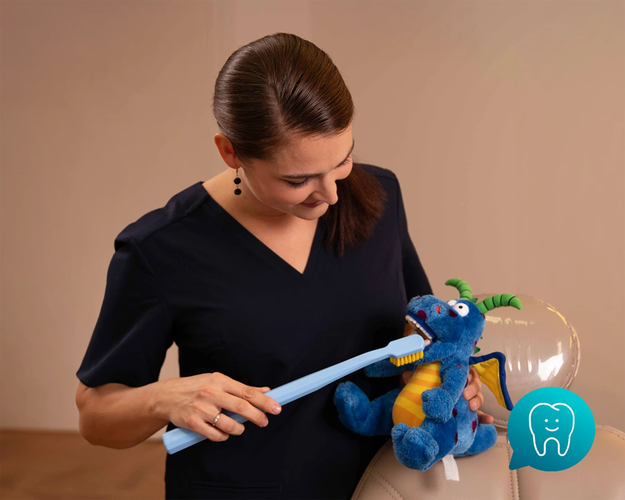
Every child should see brushing their teeth as a natural and pleasant part of the day. A playful approach can help—let the child try brushing your teeth first, laugh together and turn the toothbrush into a favourite “toy”. In return, the child will often allow you to brush their teeth more easily and with a good mood.
It is important to choose a toothbrush that matches the child’s motor skills. The most suitable toothbrush has a non-slip handle, a small head and soft, dense bristles.
Even before the first baby tooth falls out—usually the lower central incisor—the first permanent teeth appear around the age of six. These are the so-called “six-year molars”, which grow behind the last baby molars in both the upper and lower jaw. Parents often do not notice them at first, yet these are very important teeth that should last a lifetime.
Learn about and care for dental hygiene of primary teeth to support the health, beauty and smiles of your children.


Our team


Head Dentist


Doctor

Hygienist


Doctor